Books Read:
What Monstrous Gods by Rosamund Hodge
Phantastes by George MacDonald
The Protoevangelium of James
Three shorts by Clifford D. Simak: “Installment Plan”, “I Had No Head and My Eyes Were Floating Way Up in the Air”, and “Small Deer”
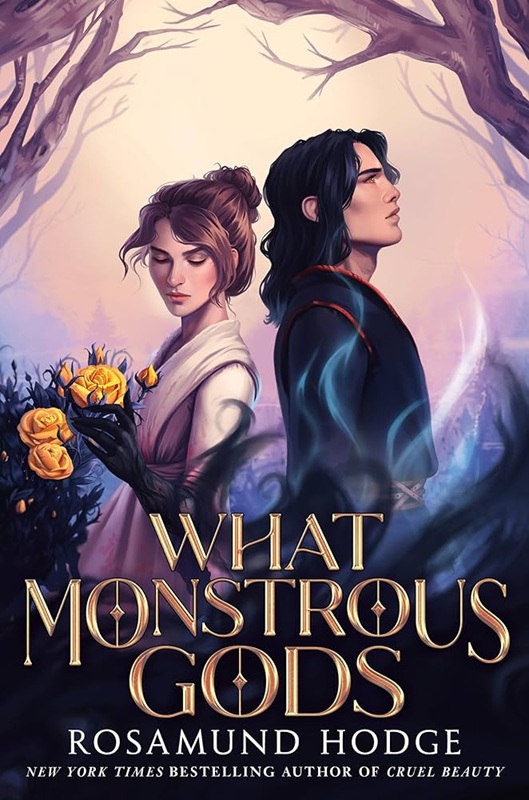 I was delighted with Rosamund Hodge’s What Monstrous Gods. Lia is a novice on the verge of taking her vows as a nun, dedicating her life to praising Nin‑Anna, one of the many gods in this world. She is the eighth girl chosen to attempt lifting the curse that has left the royal family asleep for five hundred years.
Among the things that will stay with me from this novel are the settings. Several god‑realms are visited; places vividly strange and darkly powerful. Each shrine that serves as a gateway feels fully realized, and the gods themselves are unforgettable. Take Nin‑Anna, Lady of Spring and Healing:
A gentle, dawn‑bright goddess. She has golden hands, and flowers spring from the earth where she walks. Springtime and healing and new life are her domain. Her saints have golden hands and die of a burning fever as they whisper of flowers.
Or Mor‑Iva, Knife of the Gods:
A dark, bloody goddess. Her chest is a bloody chasm, and she holds her heart in charred, clawed hands. She is the knife of the gods and slays those she deems unworthy. Her saints have clawed hands with skin charred black; they die when their hearts burst under her judgment.
The saints of these gods are another haunting element. Some saints are made against their will; others dream of sainthood. Either way, as those descriptions suggest, sainthood is no blessing.
There are heretics in this world too. These figures the reader recognizes as Christian, though that word is never spoken outright. Against this rich backdrop, Lia travels, navigates political realities, loves, and hates. Highly recommended!
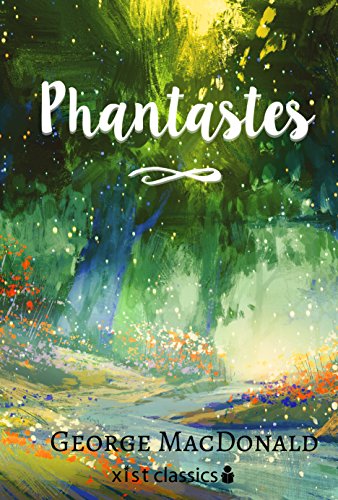 From there I went to another novel where the main character wanders into a strange realm. Phantastes is the second George MacDonald novel I’ve read, and one thing I know is that it that deserves a slower, more careful read than the read I gave it. It’s dreamlike and episodic… through those dreams, it took me a minute to realize that what was unfolding was an exploration of what it means to be a good man.
MacDonald wrote this early in his life, while Lilith – the other of his novels I’ve read – was the last thing he published. I don’t think I was thinking this hard about life in my twenties, certainly not like I am now. And I certainly am oblivious to much of the symbolism here. I’ve long thought that we, as a society, have lost the meaning of so many of the symbols that people in the past would have understood because we no longer share the same stories.
One I think I grasp: the marble woman seems to stand for “enlightenment”, something always pursued but never quite possessed. Near the end, the protagonist becomes a knight, assuming that was the pinnacle of masculinity, only to step down into the role of squire, choosing service over status, and realizing that true strength lies in humility.
At least, that’s what I’m taking from it. And I’m sticking to it.
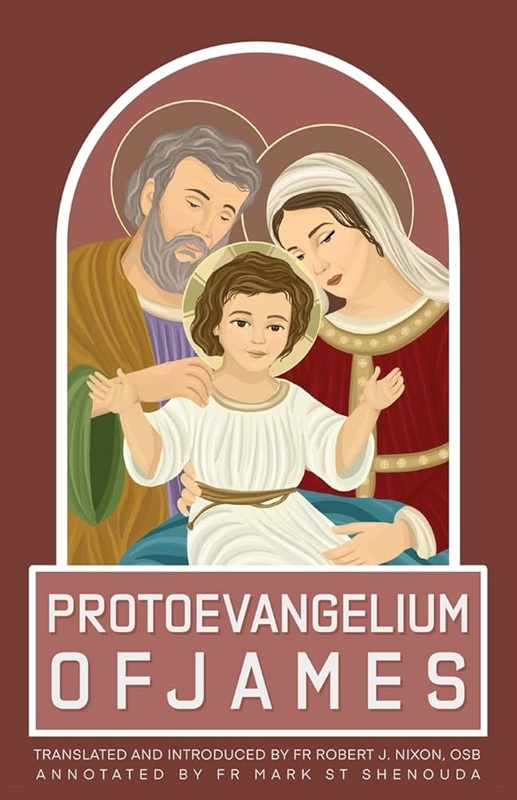 In a church discussion, I realized I had no idea where the names Joachim and Anna – Mary’s parents – came from. How do we know their names? They aren’t mentioned in the New Testament. A little digging led me to the Protoevangelium of James, a late second‑century text that was not considered scripture by the Magisterium. Intrigued, I tracked down a copy.
The book recounts the story of Joachim and Anna, whose experience mirrors that of Abraham and Sarah, as well as Zechariah and Elizabeth: childless until late in life, when God intervenes. It then turns to Mary’s youth in the temple, her betrothal to Joseph, and concludes with the birth of Jesus and a few of the events we are familiar with that follow in the Gospels.
Reading it inevitably raises questions about scripture itself: what was included, what was left out, and why. Of this book there shouldn’t be any question; it reads like religious fiction. At one point Joseph is accused of defiling the pregnant Mary, who is described as a temple virgin. Though they were betrothed, Joseph is portrayed less as a husband than as her guardian. To prove their innocence, a priest administers “the Lord’s water of testing”. Joseph and Mary drink, go out separately to the wilderness for a spell, then return unharmed, and thus vindicated.
To my knowledge, nothing like this appears in the New Testament. There is a parallel in the Old Testament: Numbers, Chapter 5. But even that differs in important ways. The whole episode feels more like a fanciful elaboration than a canonical account. Still, it was an intriguing read, and one that sheds light on how early Christians filled in the narrative gaps with imagination and legend.
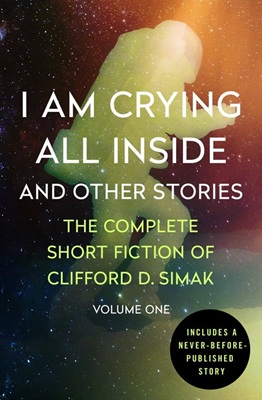 I’ll finish with three short stories from Clifford D. Simak. The deeper I go, the more I appreciate him, and I’ve set myself the goal of reading everything I can over the next couple of years. (Surely I’ll be more faithful to that goal than my gym membership. Which gym was that, again?) That includes the fourteen‑volume collection of his complete short fiction. The first volume, I Am Crying All Inside and Other Stories, has already hooked me. I’m three stories in, and liked them all.
“Installment Plan” brings humans and robots together on an alien planet, intent on trading with the natives: human goods of every kind in exchange for tubers that contain a perfect tranquilizer. Simak nails modern humanity in this single line: “To a race vitally concerned with an increasing array of disorders traceable to tension, such a drug was a boon, indeed.”
“I Had No Head and My Eyes Were Floating Way Up in the Air” was originally intended for the third volume of Dangerous Visions, though Harlan Ellison never published it.* It appears here for the first time. The story unfolds as a narrative told by a man whose body is altered by local aliens after an accident. Or was it an accident? Simak takes us through this person’s thoughts and considers what it means to be human – or, rather, what this guy thinks it means to be human – along the way.
“Small Deer” (1965) takes us back to the age of dinosaurs. Time‑travel stories to that era are hardly rare, but this is a good twist. It’s action‑packed and ominous.
Simak is optimistic overall, but pessimistic in the right places. His stories are a refreshing break from modern science fiction and fantasy.
* The Last Dangerous Visions was published after Harlan Ellison passed away, but did not include Simak’s story.