
Why Science Fiction and Fantasy?

Every now and then I feel the urge to branch out of science fiction and fantasy more. I generally do that for a bit, but I always return.

I am inspired by thoughts generated after reading Vandana Singh’s “A Speculative Manifesto”, an essay at the end of her collection The Woman Who Was a Planet and Other Stories. She opens the essay by stating that “the modern descendants of the Epic of Gilgamesh and the Mahabharata are the genres of science fiction and fantasy, including various sub-genres like magic realism, alternate history and slipstream”. Then she asks the question, “But humanity has grown out of its childhood, as each of us grows out of it as individuals. Why not discard the old myths, legends, tall tales, and their modern counterparts, as we discard other childish things?”

I admit that the impetus for myself asking these questions is that I fall into the pattern of thinking that I
ought
to be spending my time on something “more important”.

In her essay, Singh starts by talking about the deep importance of myth for us humans, then discusses the revolutionary potential of speculative fiction, and the use of metaphor in both science fiction and fantasy. She ends the essay by pointing out that this stuff is fun. You can read this essay here: A Speculative Manifesto by Vandana Singh.

She’s right, of course, on all of the above. I continue to return to science fiction and fantasy because other types of fiction don’t deliver the kinds of things I like to experience. The only thing I’d add to what she wrote is that while I do love the touching on the mythological and I deeply appreciate how the genre allows an author to view humankind by presenting something that is outside of humankind, I also just plain love a good idea story. That’s part of what I believe Singh means by “fun”; an exploration with “the universe as a grand stage”.

Poul Anderson on the same topic:

In this day when humankind has at last the power to win the freedom of the universe, astronautics is more than a set of technologies, more even than a magnificent adventure. Spaceflight is potentially the most meaningful thing that has happened since a half-ape first tamed fire, or first looked up at the sky in wonder. Incalculable material wealth, knowledge now unimaginable, growth of the spirit beyond all bounds, can be the lot of every man and woman in our future. Is this not worth thinking about, reading about, and hearing about?

Here I am in my mid-fifties, having read science fiction and fantasy for more than forty years, and I still love it. I hope I will stop questioning it.

Posted in Posts | Tagged | Comments Off on Why Science Fiction and Fantasy?

Good Story 279: One Corpse Too Many

For episode 279 of the A Good Story is Hard to Find podcast, Julie picked One Corpse Too Many by Ellis Peters. This was my first Brother Cadfael novel, and it won’t be my last! I thoroughly enjoyed the 12th century setting. I’m also intrigued by the fact that around these stories actual historical events are playing out.

Brother Cadfael is a Welsh Benedictine monk with a past that included participation in the Crusades. In this book, the monastery is charged with burying 94 bodies after a battle took place nearby. The problem is that 95 bodies are delivered, not 94. One corpse too many. And Brother Cadfael takes on the mystery.

You can listen on the Good Story website or subscribe at most of the places folks listen to podcasts; just search your favorite podcast app for A Good Story is Hard to Find.

I found a very nice interview of the author, who’s actual name is Edith Mary Pargeter, from 1991: Queens of Crime: Ellis Peters

From that interview:

I tend to feel that people really want something they can live with in comfort, and a little encouragement to go on living, rather than being battered by violence the whole time.

I think it’s a tremendous relief to have something that is hopeful, encouraging, makes you feel better about being human. Not worse.

Tragedy is entirely bearable and indeed uplifting provided it retains hope.

Also interesting: Edith Pargeter was 60 when she wrote the first Brother Cadfael novel.

Posted in Posts | Tagged | Comments Off on Good Story 279: One Corpse Too Many

Anne McCaffrey

Here is the fourth episode of Time Out of Mind, a 1979 BBC2 series on science fiction. The featured author is Anne McCaffrey.

Posted in Posts | Tagged | Comments Off on Anne McCaffrey

Meanwhile, over at Good Story…

March was Silent Movie month over at the A Good Story is Hard to Find podcast!

In episode 277, Julie and I talked about my silent movie picks: Buster Keaton’s The General and Alfred Hitchcock’s The Lodger.

And in episode 278, we talked about Julie’s picks: Metropolis and The Phantom Carriage.

You can listen on the Good Story website or subscribe at most of the places folks listen to podcasts; just search your favorite podcast app for A Good Story is Hard to Find.

Posted in Posts | Tagged | Comments Off on Meanwhile, over at Good Story…

Reading: March 7, 2022

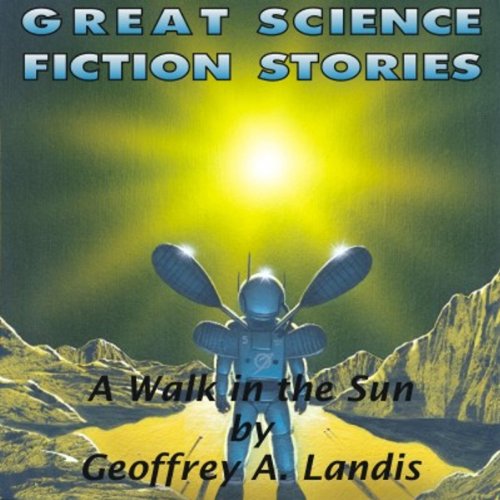
A couple of short stories this time. One of them is an old favorite, first published in 1991: “A Walk in the Sun” by Geoffrey A. Landis. Luckily, Trish Mulligan is alive after a crash landing on the moon. Unluckily, a rescue is thirty days away. Luckily, her solar powered spacesuit is operational. If she’s going to survive, she’s got to keep her suit working, and to keep her suit working she’s got to keep those solar panels. Her solution is to keep walking, fast enough to avoid sunrise. The diameter of the moon = 6786 miles. The moon rotates once every 27 days. So to pull this off, Trish needs to average 10.47 miles per hour for 27 days.

I still like the Infinivox audio version of this story, read by Amy Bruce. It brought back Vox: SF for Your Ears.

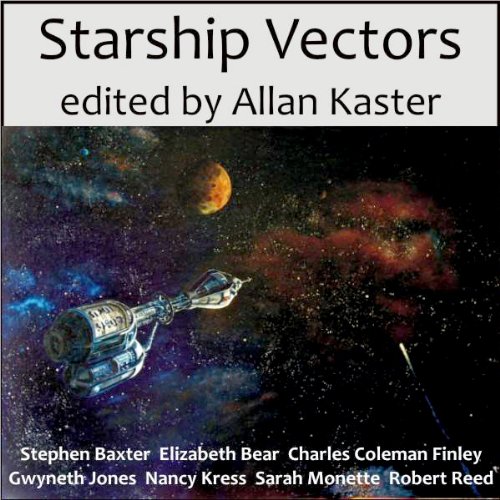
The other short I read was “Boojum” by Elizabeth Bear and Sarah Monette from 2008. Here’s the opening:

The ship had no name of her own, so her human crew called her the Lavinia Whateley. As far as anyone could tell, she didn’t mind. At least, her long grasping vanes curled—affectionately?—when the chief engineers patted her bulkheads and called her “Vinnie,” and she ceremoniously tracked the footsteps of each crew member with her internal bioluminescence, giving them light to walk and work and live by.

The Lavinia Whateley was a Boojum, a deep-space swimmer, but her kind had evolved in the high tempestuous envelopes of gas giants, and their offspring still spent their infancies there, in cloud-nurseries over eternal storms. And so she was streamlined, something like a vast spiny lionfish to the earth-adapted eye. Her sides were lined with gasbags filled with hydrogen; her vanes and wings furled tight. Her color was a blue-green so dark it seemed a glossy black unless the light struck it; her hide was impregnated with symbiotic algae.

Where there was light, she could make oxygen. Where there was oxygen, she could make water.

This was the first time I’ve read this one, and I liked it quite a bit. On this ship is a person who works in the engineering section named Black Alice. We follow her as she feels the Lavinia Whateley’s “shiver of anticipation” as it sense prey. The authors captured the feel of walking and working inside this creature, and of a person that felt connected to it. Very nice!

Posted in Posts | Tagged | Comments Off on Reading: March 7, 2022

Capitol Reef National Park

Here are some pics from Capitol Reef National Park:

Posted in Posts | Tagged | Comments Off on Capitol Reef National Park

Good Story 276: Njal’s Saga

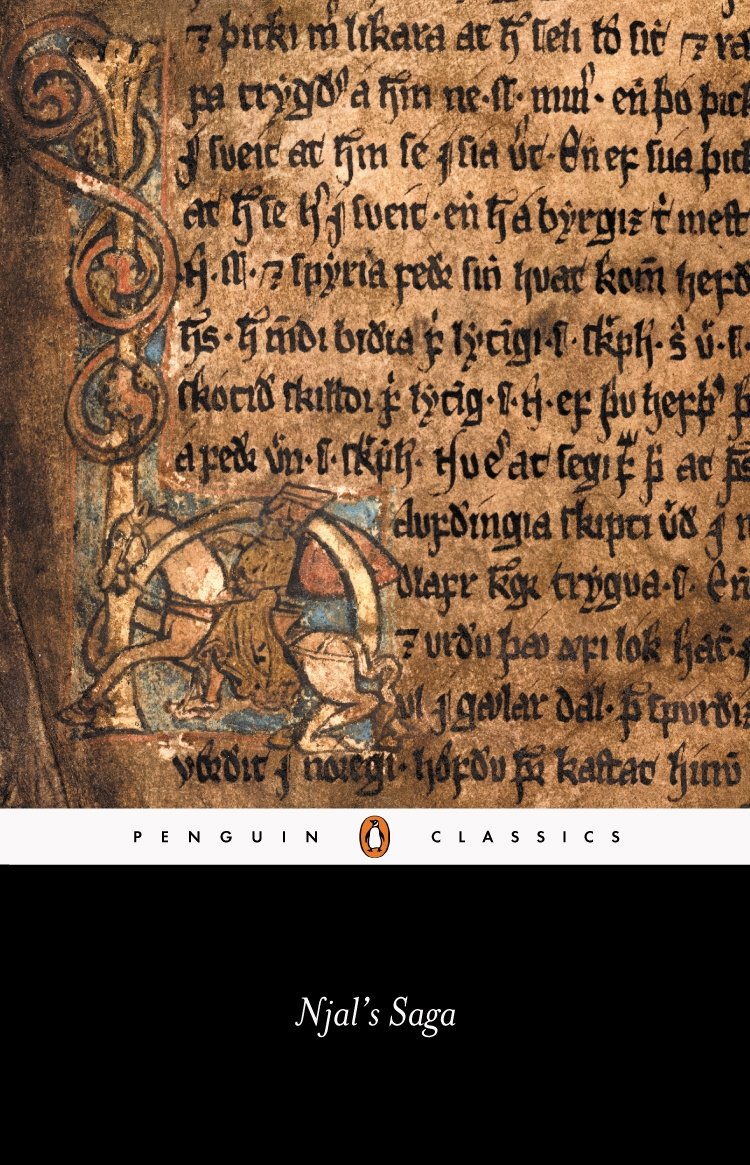
Njal’s Saga! The longest Icelandic saga!

Julie and I talked about Njal’s Saga in Episode 276 of Good Story. I love this 12th century story of Viking physical mayhem and courtroom drama.

You can listen on the Good Story website or subscribe at most of the places folks listen to podcasts; just search your favorite podcast app for A Good Story is Hard to Find.

Posted in Posts | Tagged | Comments Off on Good Story 276: Njal’s Saga

Reading: February 25, 2022

For a long while the only Louis L’Amour books I’d read were not westerns: The Walking Drum (set in Europe in the Middle Ages), and The Last of the Breed (about a Native American pilot who is shot down by Soviet Russia). I liked both books, but having heard that L’Amour writes westerns (ha ha) I tried a few, and I love them. I have read a handful of them now, and yeah they are good.

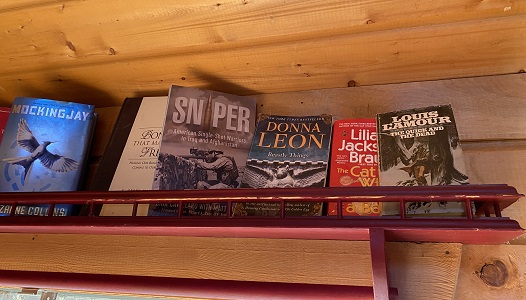
The Quick and the Dead is a terrific quick read about a city dweller family of three who gets in over their head on their way across the prairie. Luckily, Con Vallian happens by and lends a hand.

I read this book while in a rented cabin in central Utah near the Capitol Reef National Park. I left it in there on the bookshelf for the next person…

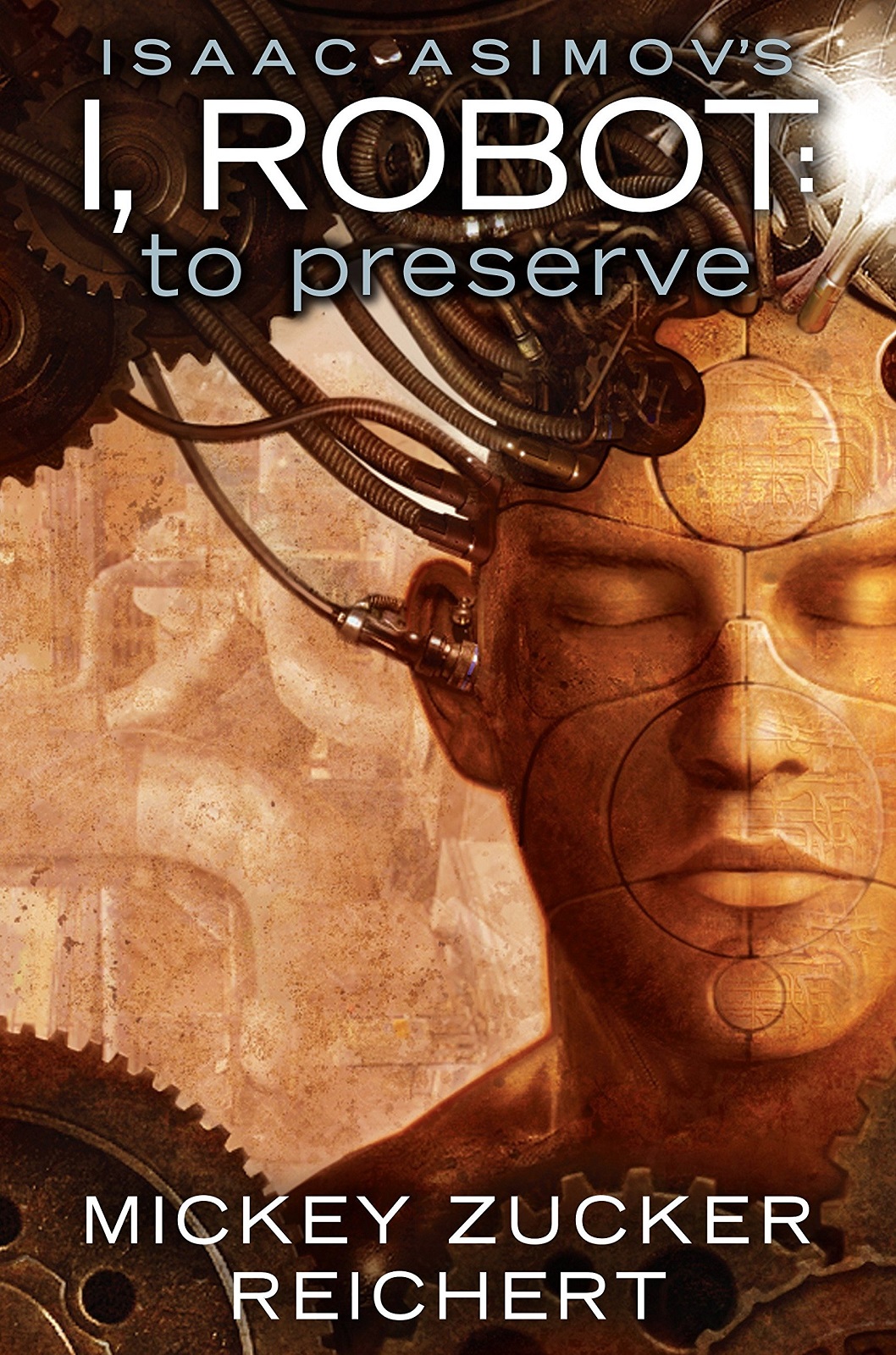
I’m still keeping up with Shawn D. Standfast’s Asimov Future History Project. For three weeks (including next week; I’m a week ahead now) we’ve been reading the I, Robot trilogy written by Mickey Zucker Reichert and published from 2011 to 2016. The books are: I, Robot: To Protect; I, Robot: To Obey; and I, Robot: To Preserve. I’ve read all three now, part of the second and all of the third on audio.

They… are not terrific. But there’s some good in there too.

The books are about Susan Calvin, the famous robopsychologist character in some of Isaac Asimov’s robot stories. In Asimov’s stories, she’s described as a cold, logical, and brilliant.

But that Susan Calvin isn’t the one in these novels. From the first pages, I knew we weren’t in Asimov’s universe, since those pages say “Chapter 1: July 2, 2035” and introduce us to a twenty-something Susan Calvin who is starting her clinicals as a psychologist (treating humans) at a Manhattan hospital. Asimov’s Susan Calvin was born in 1982, so there was no attempt to fit this Susan Calvin with Asimov’s.

What I liked best about the books didn’t have anything to do with robots. Reichert skillfully wrote several character medical scenarios that would have fit very well in episodes of House, with Susan Calvin playing House. Solving those mysteries was compelling stuff, and it kept me going.

Robots are not the main part of the plot in books one and two. The third book is a robot mystery. The overall aim of the plots are to bring this book’s Susan Calvin from a brilliant psychologist solving problems for humans to the brilliant but cold robopsychologist we all know. Reichert’s Susan goes through a lot.

In the end, though, I can’t recommend the books. They were quick easy reads and I read all three, which says something positive about them, but the characters and situations didn’t rung true for me.

Julie and I finished Njal’s Saga and posted a Good Story podcast. I enjoyed it even more the second time. I’ll leave the talking about it to the podcast, but we barely scratched the surface! There was so much more to Hallgerd and Njal and Gunnar… if you want a fantastic resource to learn everything you ever wanted to know about Njal’s Saga (and other Icelandic sagas), check out the Saga Thing podcast.

I originally read this saga in a Booktube group. The hosts of the group included myself (first video here) and these fine folks:

Elena Makridina
Bookish North
Richardson Reads
A Cruel Reader’s Thesis
Steve Donoghue
The Bookish Bryants
Rambling Raconteur

In April, this group and I will do this again with Egil’s Saga. We all posted an announcement video on the Saturday I was on vacation, so here’s mine. It’s got absolutely no information about the saga AT ALL.

Books In:

  • The Captiol Reef Reader, edited by Stephen Trimble. Purchased at the Visitor Center at Capitol Reef National Park. Essays and excerpt from lots of authors, including Wallace Stegner and Edward Abbey.
  • The Portable Medieval Reader, edited by James Bruce Ross and Mary Martin McLaughlin. Found on eBay after it was recommended to me by a friend. Lots of good stuff in there!
  •  

    Posted in Posts | Tagged | Comments Off on Reading: February 25, 2022

    Good Story 275: Master and Commander (2003)

    Another movie for the Pool Room!

    Julie and I talked about Master and Commander (the movie) in Episode 275 of Good Story. I really liked where our discussion went. And I had to add 20 Patrick O’Brien novels to my tbr…

    You can listen on the Good Story website or subscribe at most of the places folks listen to podcasts; just search your favorite podcast app for A Good Story is Hard to Find.

    Posted in Posts | Tagged | Comments Off on Good Story 275: Master and Commander (2003)

    Reading: February 8, 2022

    Those vampires are still waiting. And so is Asimov.

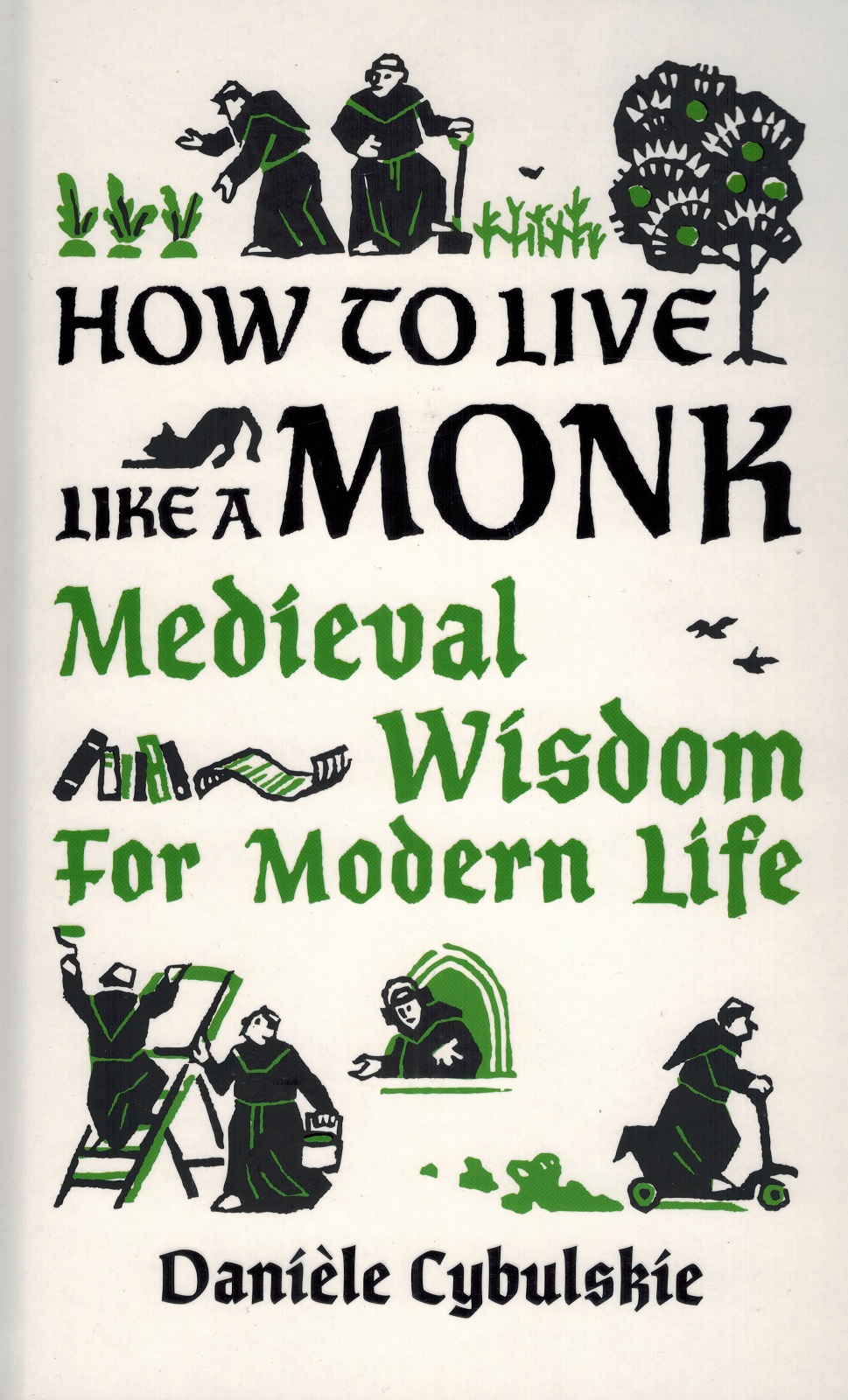
    How to Live Like a Monk: Medieval Wisdom for Modern Life is a beautiful little book. Daniele Cybulskie, part of the crew over at the medievalists.net website, blog, and podcast, wrote this book about monks, nuns, and their practices during medieval times. I really like the author’s style, and loved the details of monkish life. I wasn’t as enamored with the “wisdom for modern life” parts, but it’s the smaller part of the book. It’s possible that I’ve read enough life advice over the years that nothing offered here struck me as new. But the medieval monkish bits I liked quite a lot!

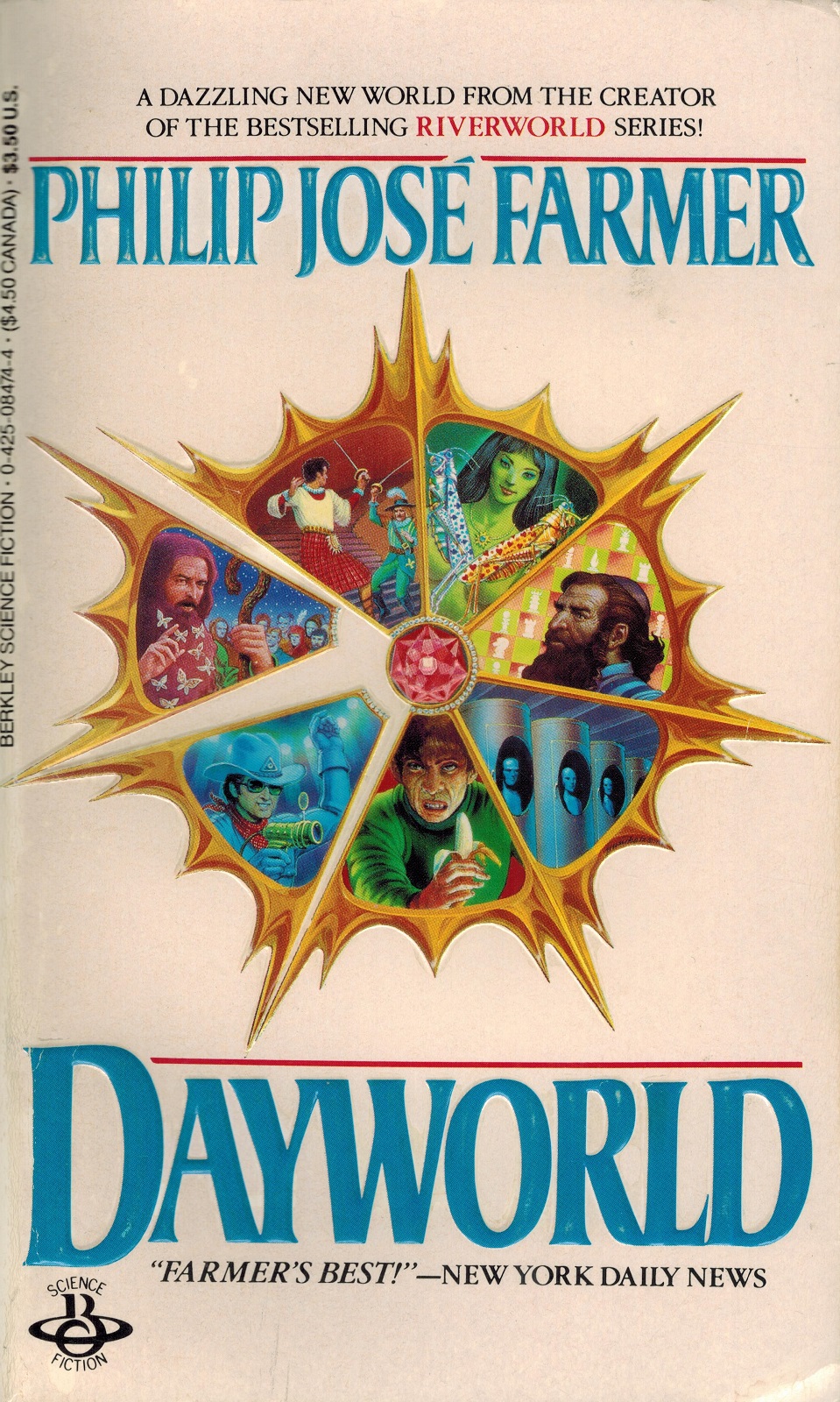
    I started Dayworld by Philip Jose Farmer, a book recommended by Tom LA Books and a book I’m buddy reading with David Wiley, who has a website and a YouTube channel, both worth your time.

    Dayworld starts with a quick few pages of info dump. Farmer explains a bit about the world in a way that doesn’t feel like part of the narrative, but like the author talking to the reader. This is fun stuff, Farmer says. Check it out. On this crowded world, people spend 6 of 7 days in a “stoner”, and 1 glorious day out and about in the world. In other words: every day of the week, one seventh of the population runs around living while the other six sevenths sit in their stoner pods, hibernating.

    Our protagonist, though, is a daybreaker. He has found a way to stay active all seven days. I’m 100 pages in and have seen his Tuesday life and part of his Wednesday life. I’ve seen his Tuesday wife and his Wednesday wife. And I’ve seen how complicated it was getting safely from Tuesday to Wednesday. Fun book so far!

    I haven’t read a lot of Philip Jose Farmer, but I did like To Your Scattered Bodies Go.

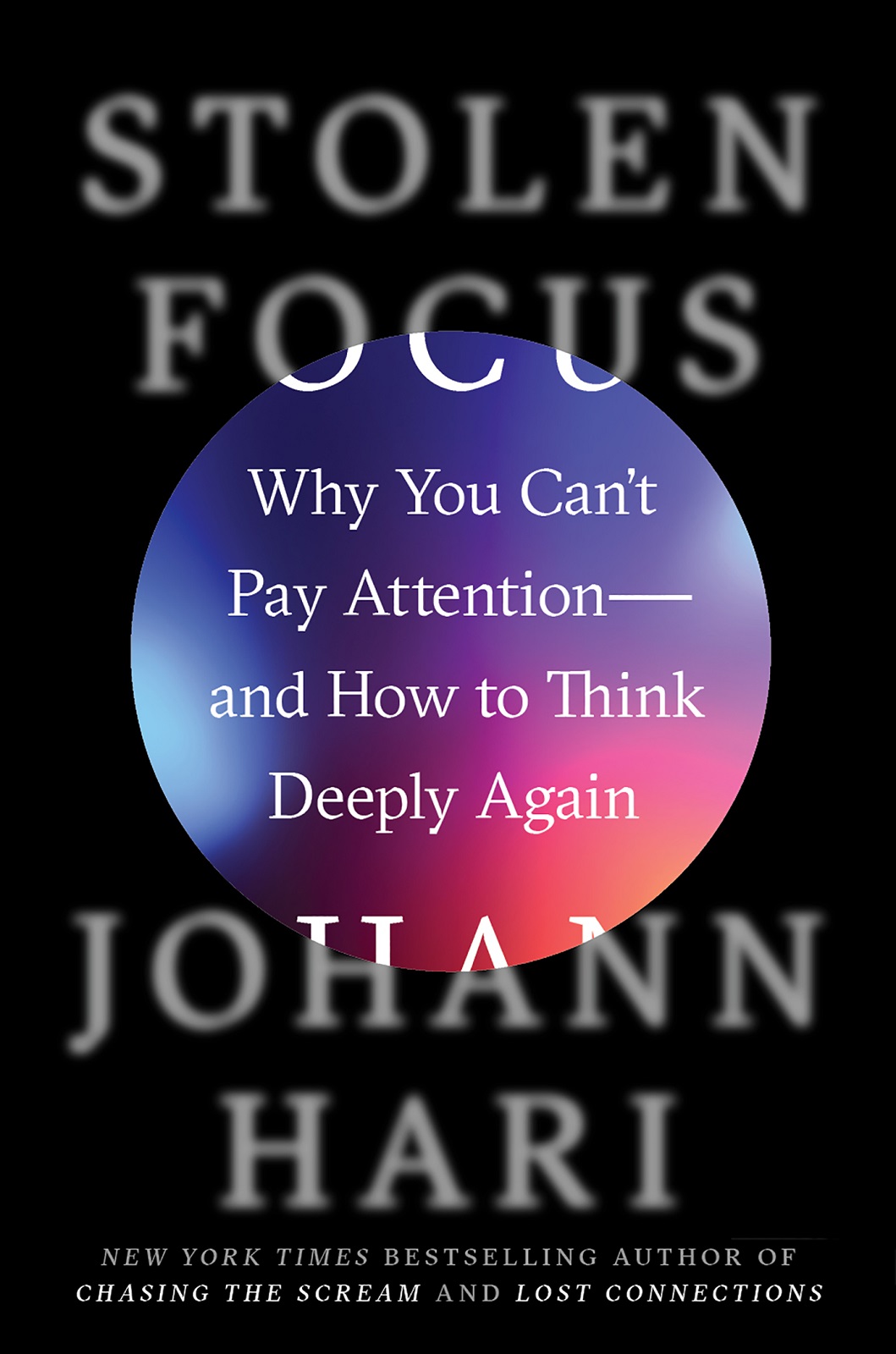
    I’m listening to Stolen Focus by Johann Hari. The subtitle is: Why You Can’t Pay Attention–and How to Think Deeply Again. I’m interested in books about reclaiming deep thought and have read several of them. This is a good one because Hari is a very good writer (and a very good narrator), and he looks at the problem of lost focus from a number of different angles, including but not limited to the what-is-social-media-doing-to-my-brain angle that other authors focus on (if they’ve figured out how to focus, that is).

    Some sample chapter titles:

  • Cause One: The Increase in Speed, Switching, and Filtering
  • Cause Two: The Crippling of Our Flow States
  • Cause Three: The Rise of Physical and Mental Exhaustion
  • Cause Four: The Collapse of Sustained Reading
  • Cause Five: The Disruption of Mind-Wandering
  • Cause Six: The Rise of Technology That Can Track and Manipulate You
  • Cause Seven: The Rise of Cruel Optimism
  • Cause Eight: The Surge in Stress and How it is Triggering Vigilance
  • Cause Nine and Ten: Our Deteriorating Diets and Rising Pollution
  • Cause Eleven: The Rise of ADHD and How We Are Responding to It
  • Cause Twelve: The Confinement of Our Children, Both Physically and Psychologically
  •  
    He addresses each subject in a conversational style, and interviews experts in various disciplines, letting us know what he found. Christopher Hitchens once said that “the most satisfying compliment a reader can pay is to tell me that he or she feels personally addressed”. Johann Hari makes me feel personally addressed in both his prose and narration, and the book, so far, is time very well spent.

    I’m currently in the “Cause Six” chapter. Could fixing social media be as simple as moving away from an ad-supported model to a subscription model?

    Last thing: I am continuing Njal’s Saga, more than halfway there. Still enjoying this second visit quite a bit. More on Njal soon!

    Books in:

  • Titan by John Varley (this is a gap in my reading. Looking forward to it.)
  • Wizard by John Varley (sequel to above, bought them together)
  • The Church in the Dark Ages (430-1027) by Phillip Campbell (part of an excellent series of short Church histories collectively called Reclaiming Catholic History, published by Ave Maria Press)
  • Orbitsville by Bob Shaw (in from Paperbackswap, I’m sdanielson on there)
  • The Ragged Astronauts by Bob Shaw (also Paperback swap)
  • Lenten Gospel Reflections by Bishop Robert Barron (Lent is fast approaching!)
  • Going to Church in Medieval England by Nicholas Orme (really looking forward to this)
  •  
     

    Posted in Posts | Tagged | Comments Off on Reading: February 8, 2022

    Reading: January 31, 2022

    My goodness time flies. January is behind us.

    I haven’t read a whole lot in the last two weeks. I did read another five Asimov stories in the Future History Project, but the goal was ten, so now I’m a week behind. The five stories I read were “Segregationist”, “Let’s Get Together”, “The Tercentenary Incident”, “First Law”, and “Runaround”.

    These stories were all vaguely familiar and very enjoyable. My favorite was “The Tercentenary Incident”, in which the president of the future United States (which is now part of a bigger Earth government) is assassinated right after giving a Tercentenary speech on July 4, 2076. The method of assassination was interesting; the president simply disappeared in a “glitter of dust”. Clearly a Q36 Explosive Space Modulator. Shortly after that, the same president reappears and gives a different speech. Now we know one of the two presidents is a robot, but which one? Lots of that kind of thing coming as we move forward with Asimov’s stories.

    Three of the next five stories are Susan Calvin stories. I’m looking forward to them!

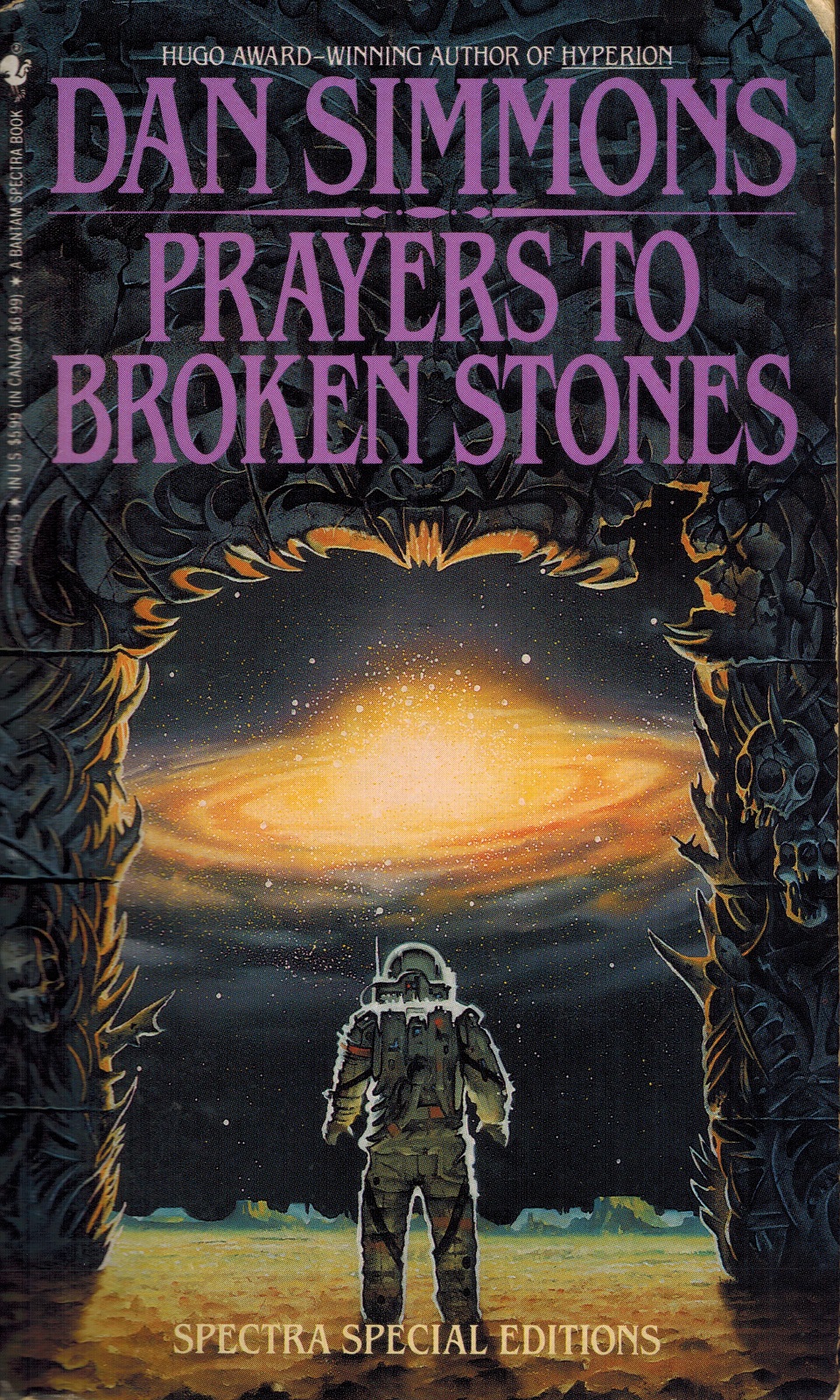
    I read Dan Simmons’ first published story, a horror tale called “The River Styx Runs Upstream”. It reminds me of Bradbury, but darker. In the story, the mother of the family dies for an unknown reason. The father spends a great deal of money, a financially ruinous sum, to have “The Resurrectionists” reanimate the corpse in some kind of technological way. The mother is now present physically, but not at all present in spirit. She walks around but doesn’t respond to interaction. I won’t spoil the story further, but it’s unsettling. This family is not at all well.

    In the introduction, Simmons talks about Harlan Ellison reading this story during a workshop, and how he felt being taken seriously by both him and other writers.

    I’m also well into Njal’s Saga for the second time. I’m loving it again, and look forward to reading other Icelandic sagas. I have a big book full of them right over there. We’ll talk about it on Good Story soon, but first we’ve got a movie to discuss: “Master and Commander” starring Russell Crowe, which was a terrific movie that reminds me of a whole mess of books I’d like to read.

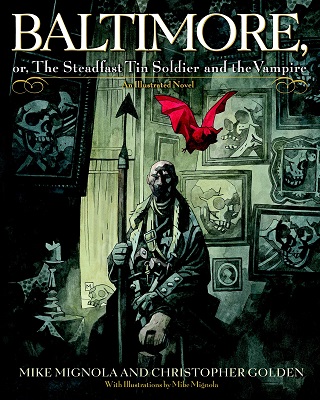
    And I still haven’t forgotten about Mignola’s vampires. Huzzah!

    Books in:

  • Dayworld by Philip Jose Farmer (recommended to me by Tom, of Tom LA Books fame)
  • Cyteen by C. J. Cheeryh (one of those books I’ve been meaning to read forever)
  • The Word of the Lord: Reflections on Sunday Mass Readings for Year C by John Bergsma (thank you, Julie!)
  • Christmas on Ganymede and Other Stories, edited by Martin H. Greenberg (I am almost certain that I’m going to replace my Christmas book choice for the Good Story podcast with this one)
  • Posted in Posts | Tagged | Comments Off on Reading: January 31, 2022

    Good Story 274: Death Comes for the Archbishop

    Julie (like she usually does) picked a great one here. I knew nothing about this book when she picked it, but it’s a book that I will buy in hardcopy because I know without a doubt that I’m going to revisit this.

    The book is about the establishment of a diocese in the New Mexico territory in the 1800’s. It is also about friendship, and the Catholic Church, and the lawless western United States. Loved it.

    You can listen on the Good Story website or subscribe at most of the places folks listen to podcasts; just search your favorite podcast app for A Good Story is Hard to Find.

    Posted in Posts | Tagged | Comments Off on Good Story 274: Death Comes for the Archbishop